
Combo roof systems explained: how PU foam and membrane work together
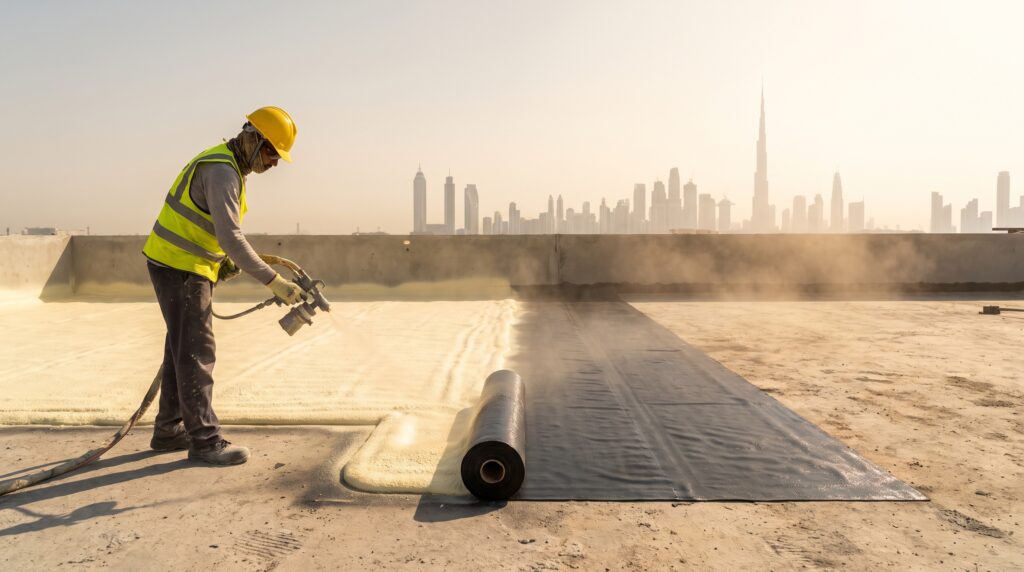
Ask five contractors what a “combo roof” means and you will get five different answers. On the roofs we build across Dubai, Sharjah and Ajman, it means one thing: a single, engineered build-up that insulates and waterproofs in one coordinated system, instead of two separate trades fighting for the same few centimetres of buildup height.
What “combo” actually means
Most roof failures we get called to repair trace back to a handover between trades — the insulation contractor finishes their scope, the waterproofing contractor starts theirs, and nobody owns the joint between the two. A combo roof removes that seam. One crew, one submittal, one sequence, one warranty covering both the thermal and the waterproofing performance of the roof.
The build-up, layer by layer
- Screed laid to falls — on a typical combo roof we cast to around 90 mm average thickness, driving water to the outlets instead of letting it pond.
- Sprayed PU foam insulation, 30–38 mm at 40–45 kg/m³, applied seamlessly with no thermal bridging at joints.
- A waterproofing membrane system — we are approved applicators of Royal Industries L.L.C’s bituminous systems (Neoflex membranes, Neoprime primers, Neocoat RBE).
- A reflective protective top coat that shields the membrane from UV and cuts rooftop surface temperature.
Each layer has a job. Skip the falls and water ponds on the membrane instead of draining. Skip the protective coat and UV embrittles the membrane within a few seasons. The combo approach exists so none of those steps gets value-engineered out.
Why combine them instead of running separate scopes
Beyond the obvious cost efficiency of one mobilisation instead of two, a combo roof gives you one point of accountability. When insulation and waterproofing are contracted separately, a leak at the junction between the two systems becomes a finger-pointing exercise. When one applicator installs both, there is nowhere for that gap to hide — and nowhere for responsibility to hide either.
Where combo roofs make the most sense
We use this build-up most on villas, warehouses and commercial flat roofs where the roof deck is doing double duty: keeping water out and keeping heat out. If your building has a flat or low-slope roof in the UAE, there is rarely a good reason to insulate and waterproof it separately.
Every combo roof we install is consultant-approved before work starts, applied by factory-trained crews, and flood-tested before handover — backed by a written warranty of up to 25 years. If you are planning a new roof or replacing a failed one, talk to us before the design is finalised; the system is far easier to get right on paper than to retrofit later.

Related service: Roof Waterproofing
Protect flat and pitched roofs from UAE heat and seasonal rain with durable membrane and coating systems.
More From Our Blog
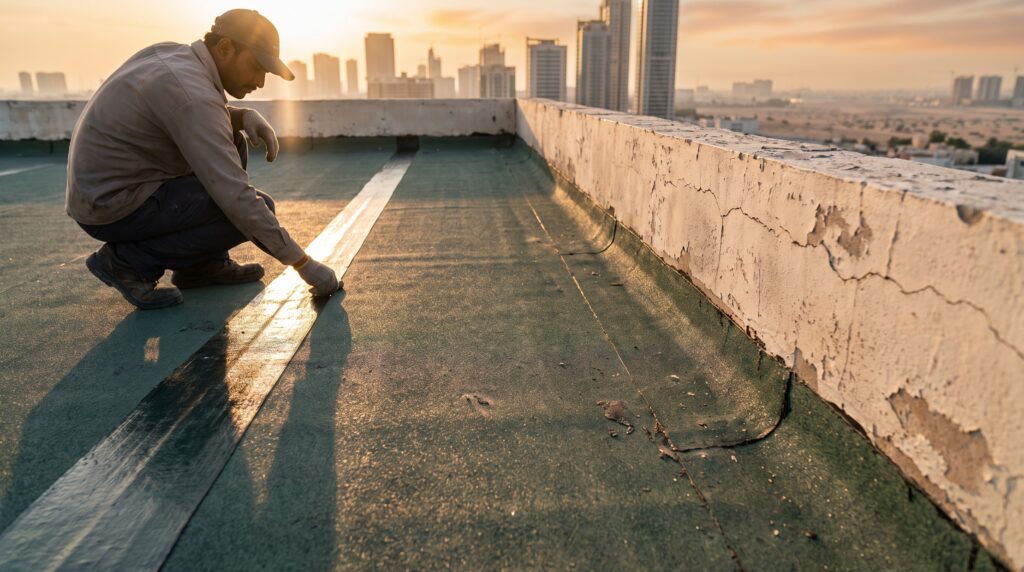
How long does roof waterproofing actually last in the UAE’s heat?
This is the question we get asked most often on-site, and the honest answer is always “it depends…
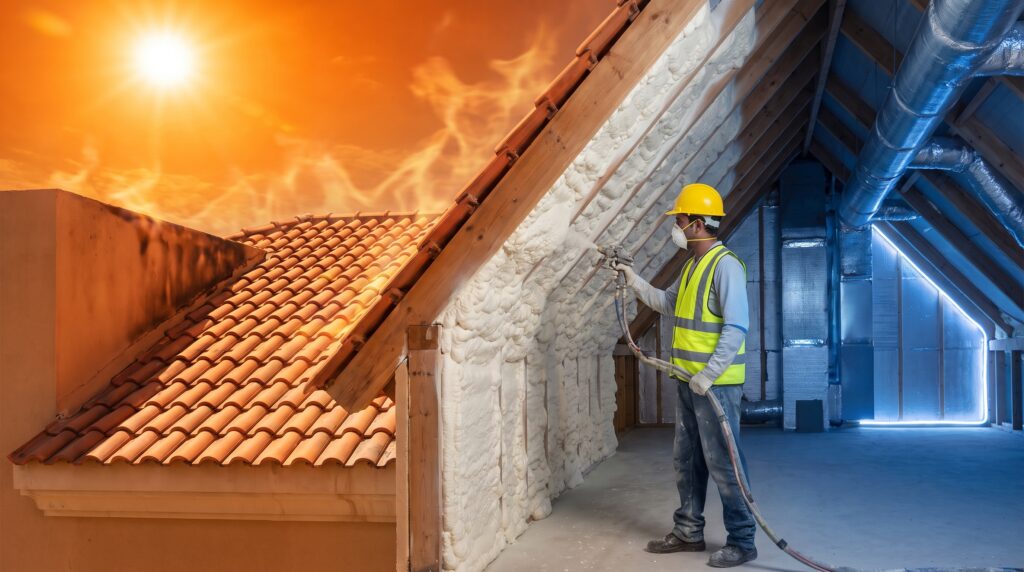
How PU foam spray insulation keeps Dubai villas cooler through summer
In a country where air conditioning is the single biggest line item on most electricity bills, the roof…
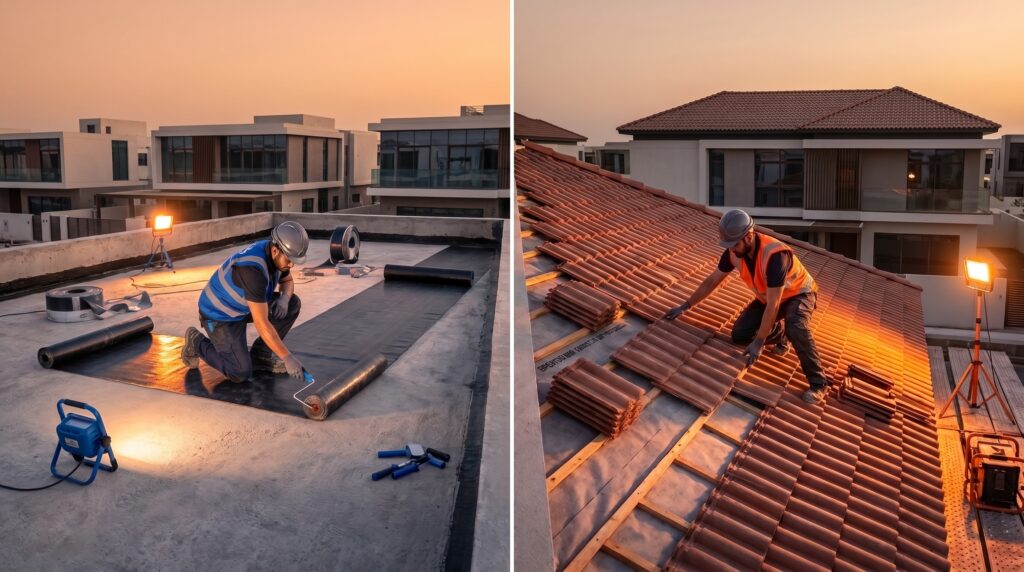
Flat vs pitched roofs: how waterproofing approaches differ in Dubai
Dubai has both flat-roofed villas and traditionally tiled, pitched roofs within the same neighbourhood, sometimes on the same…