
Flat vs pitched roofs: how waterproofing approaches differ in Dubai
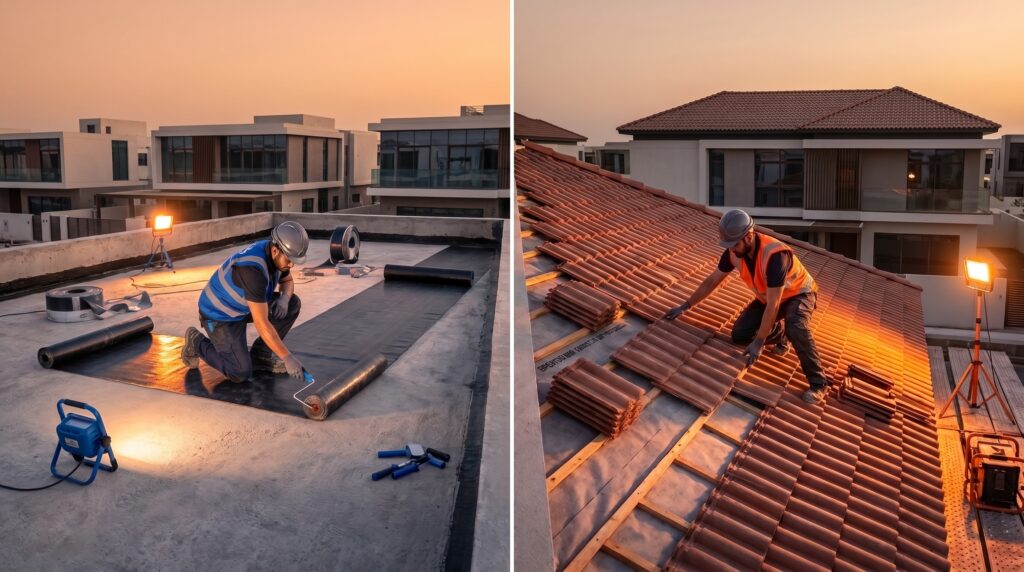
Dubai has both flat-roofed villas and traditionally tiled, pitched roofs within the same neighbourhood, sometimes on the same street. The waterproofing approach for each is built on a different assumption about what is actually keeping the water out — and mixing up those assumptions is where a lot of avoidable leaks come from.
Flat roofs: the membrane is the roof
On a flat or low-slope roof, there is no tile or overlap doing the primary job of shedding water — the membrane system underneath is the entire waterproofing layer, full stop. That means falls, terminations, outlet detailing and the membrane itself all have to be right, because there is no second line of defence above it. This is also why flat roofs need a protective top coat: with nothing shading the membrane, it takes the full force of UAE sun directly.
Pitched roofs: waterproofing is the backup, not the finish
A tiled, pitched roof sheds most of the rain through the tiles themselves, on the slope. The waterproofing membrane underneath (the underlay) is there for the water that gets past the tiles — wind-driven rain, capillary action at overlaps, and the occasional cracked or slipped tile. Because the tiles are doing the first job, the underlay is less exposed to UV, but it is much harder to inspect or repair without lifting tiles, so problems tend to go unnoticed for longer.
Which one needs more attention over time
Flat roofs need more frequent proactive maintenance — clearing outlets, checking the top coat, watching for ponding — because problems are visible early and the membrane is directly exposed. Pitched roofs need less frequent attention but a more thorough inspection when you do check them, since a failing underlay can sit hidden under sound-looking tiles for a long time before a leak finally shows up inside.
What does not change between the two
Termination details — parapets, valleys, chimneys, pipe penetrations — are the highest-risk point on either roof type. Whether the primary surface is a membrane or a field of tiles, almost every leak we trace back starts at an edge or a penetration, not in the middle of an open surface. That is the one rule that applies regardless of roof type: inspect the edges first.
Not sure which category your roof falls into, or whether it was detailed correctly for its type? We inspect both flat and pitched systems across Dubai, Sharjah and Ajman — the site visit and quotation are free.

Related service: Roof Waterproofing
Protect flat and pitched roofs from UAE heat and seasonal rain with durable membrane and coating systems.
More From Our Blog
How long does roof waterproofing actually last in the UAE’s heat?
This is the question we get asked most often on-site, and the honest answer is always “it depends…

How PU foam spray insulation keeps Dubai villas cooler through summer
In a country where air conditioning is the single biggest line item on most electricity bills, the roof…
5 warning signs your villa roof needs emergency waterproofing attention
Most emergency call-outs we attend were preventable. The roof was showing signs for weeks, sometimes months, before anyone…